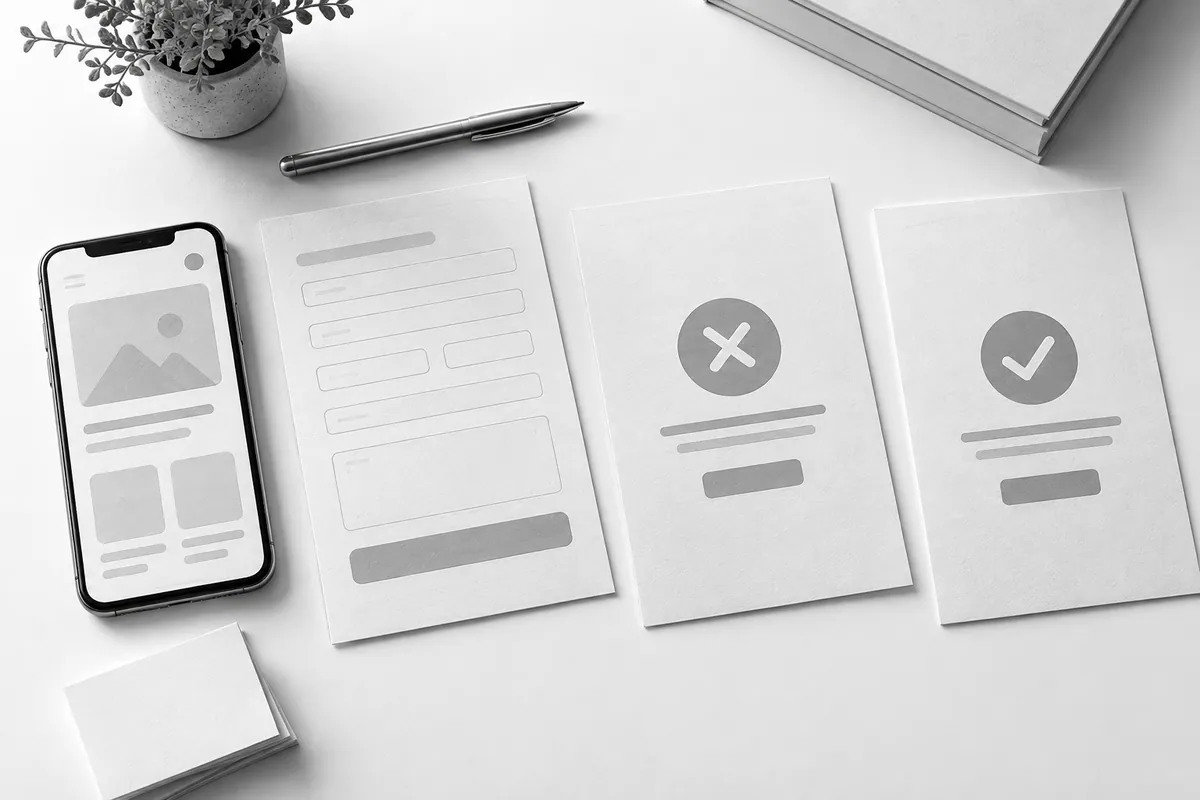
Scenarios instead of a wish list
Describe who comes to the site, what they already know and what action they need to take. A returning customer wants a quick repeat purchase, while a new B2B client needs specs and terms of cooperation. One structure may not serve both paths. A free website design lets you see the page before development starts.
Replace a requirement like "an easy-to-use catalog" with a concrete one: a visitor can pick a category, narrow the list by the specs they need, reset the filters and open a product while keeping a clear way back. Now the designer and the developer are working on the same task.

Separate the scope from the dependencies
List the page types, not just the number of pages. Ten similar service descriptions and ten different interactive tools are very different amounts of work. For each type, specify the blocks, the data sources and the possible states: an empty list, an error, a successful action.
A separate table should say who provides the copy, photos, product specs, translations and access. If content is expected from you, agree on the format and the delivery date. Otherwise there's no way to tell a development delay from waiting on materials.
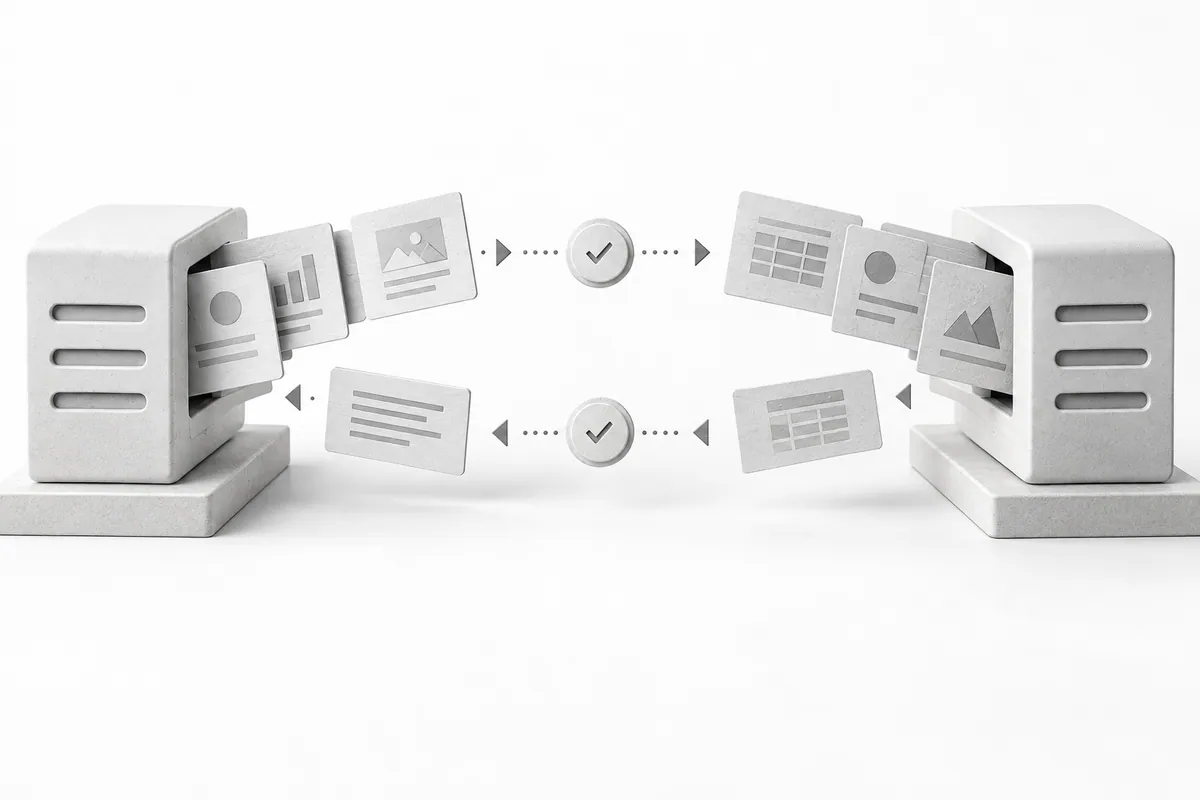
Describe integrations in both directions
"Connect the CRM" is not enough. You need to state which fields are passed, what gets created in the system, how the responsible person is assigned and what happens with a repeat request. You also need a plan for when the CRM is down: a lead must never disappear without a trace.
Agree on access to a test environment and on the limits of the third-party service. The spec can flag an unknown and set aside a separate task to investigate it. That's more honest and more useful than putting an unexamined integration into a fixed promise with no conditions.
Acceptance criteria you can actually run
Write checks as actions: open the page on a phone, fill in the form, trigger a validation error, submit again. Add requirements for headings, metadata, redirects and content editing. "Fast" also needs defined measurement conditions.
At the end of the spec, separate what's required for launch from later improvements. Changes after sign-off aren't forbidden, but they should update the scope, timeline and criteria. That protects the project from everyone working off different versions of the agreement.
Agree on this foundation before website development begins. If it's hard to set priorities between the website, ads and CRM, start with a digital plan: it will help you pick the right scope for the first stage.