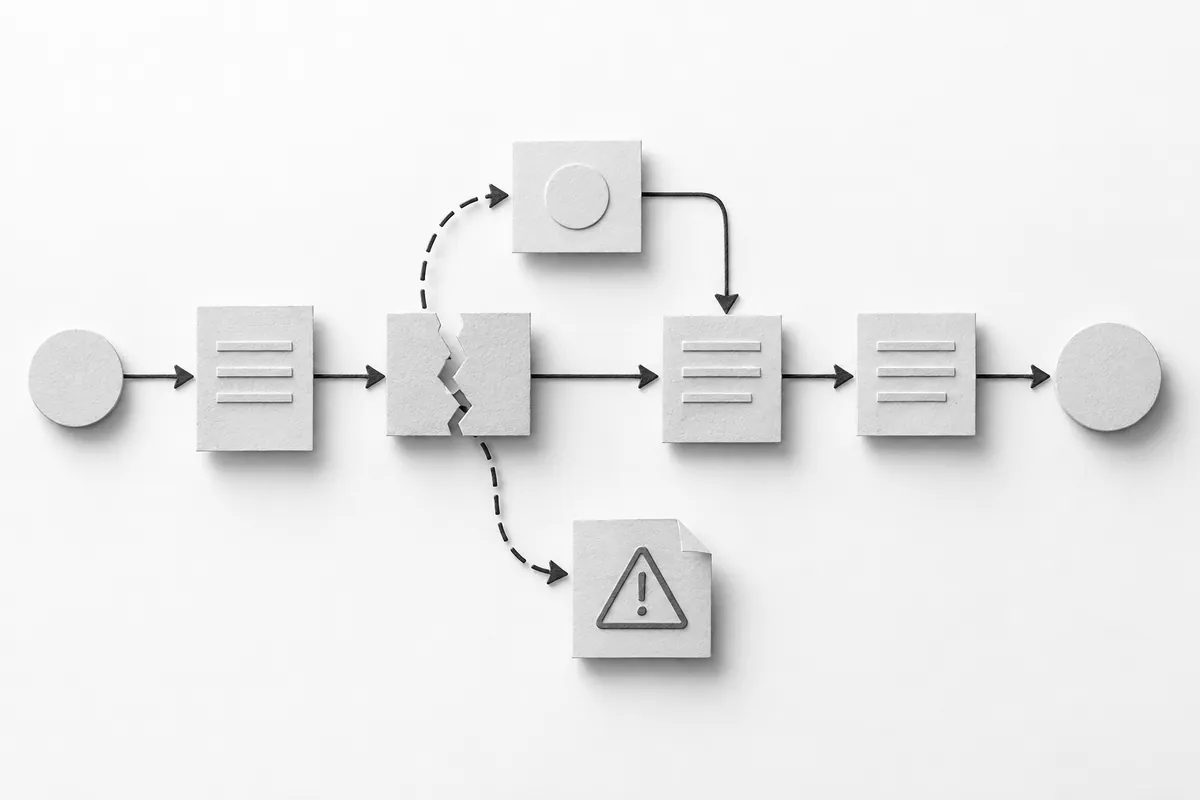
Define the contract between steps
For each handoff, define the required fields, the format and the result. For example, a lead must have an ID, a contact and the subject of the inquiry. If a field is missing, the workflow should go to an agreed exception path, not fill in a random value.
Keep data validation separate from external actions. Creating a deal in the CRM, sending a message and changing a status should each have explicit conditions. That makes it easier to see which step finished before a failure.
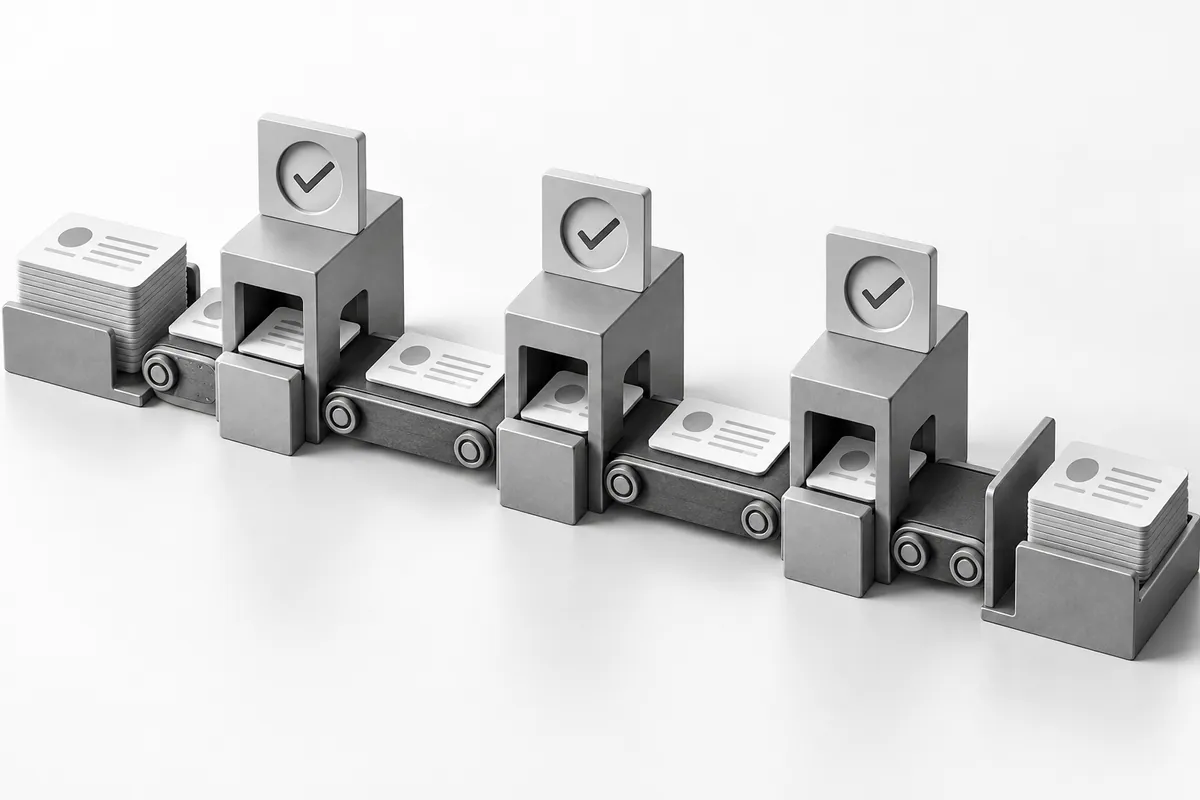
A retry must not duplicate the result
If an external service responds late, a retry can create a second deal. The same problem comes up in website and CRM integration. Use a stable operation ID and check whether the action has already been done. Retry limits and wait times depend on the specific service.
The n8n documentation on error handling describes dedicated workflows for responding to failures. The alert sent to the person in charge should include enough technical context to diagnose the issue without exposing more customer data than necessary.

Test recovery after a failure
Simulate a missing field, an unavailable service and a repeat of the same message. Make sure that after recovery the process completes once, instead of starting an endless loop of retries.
It's best to start with a simple, useful workflow, such as automated reminders. Once it's live, someone has to monitor it: that's part of business process automation. And in sales automation, the main rule is simple: the lead is saved even when the next service is temporarily down.