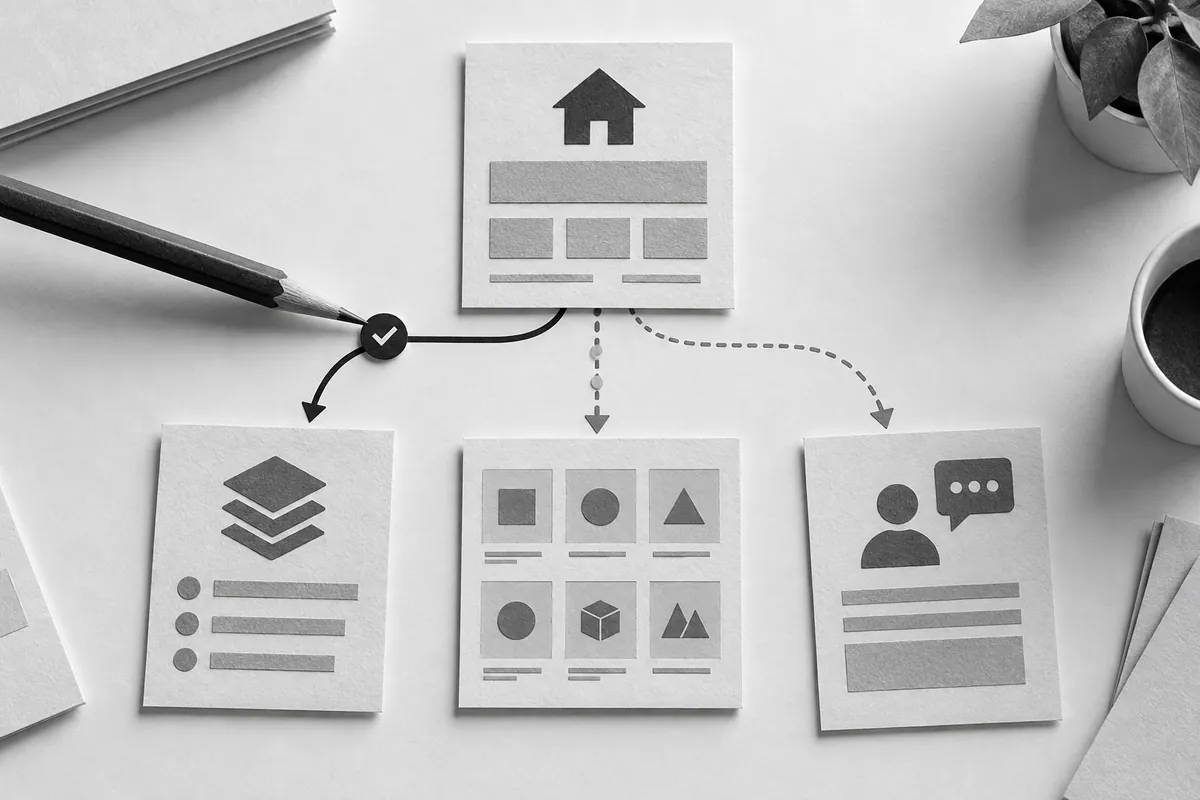
Start with the buyer's final step
Write down one completed action: pay for a product, send a specification, book a consultation or request a quote. "Learn about the company" is an intermediate step. It needs content too, but it does not explain how the website will support sales.
Take an equipment manufacturer. The buyer has to share the required capacity, installation conditions and budget limits. A cart with a pay button can create a false expectation of a fixed price here. A catalog with specifications and a quote request reflects the real process more accurately. This is a hypothetical example of the choice, not a case study with results.
When a landing page is enough
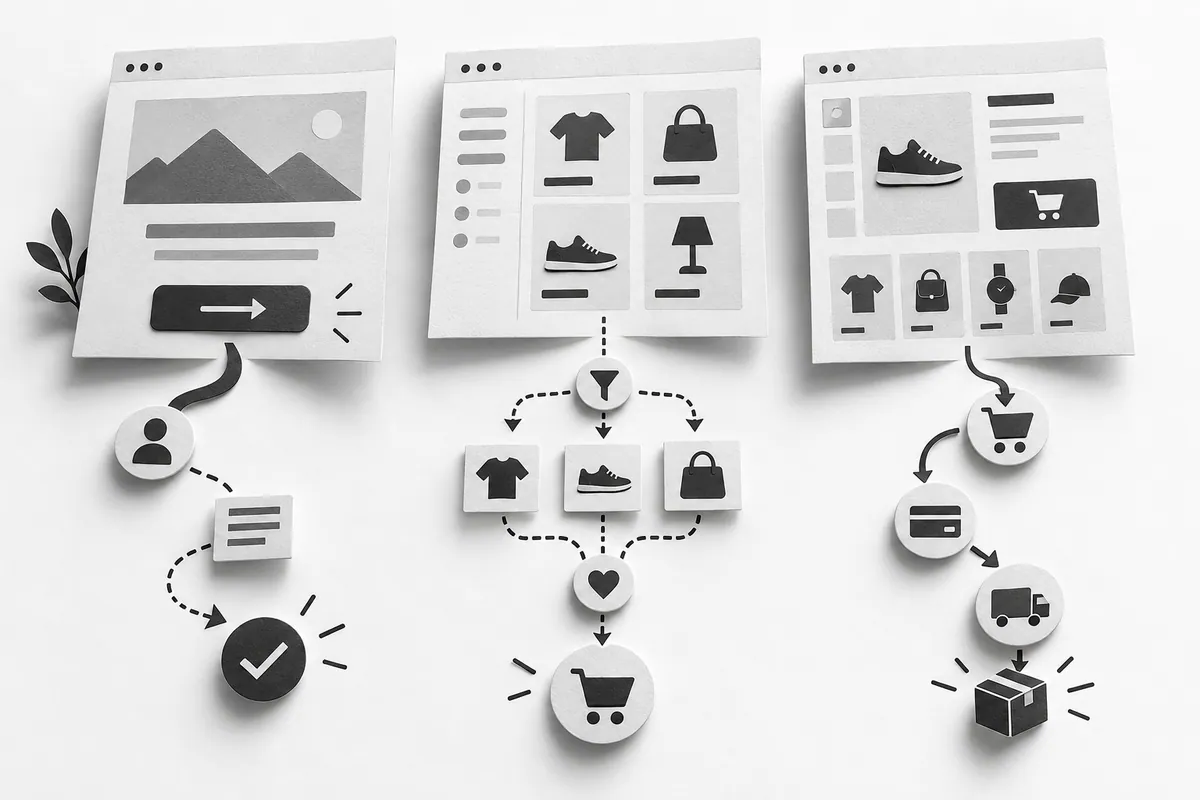
A landing page works for a single offer with a relatively short decision path. It answers the questions in order: what is offered, who needs it, what is included and how to get in touch. One page does not mean little work: you still need to gather the arguments, show the product and think through the inquiry form.
If you advertise different services to different audiences, a shared landing page makes everyone read things that do not concern them. Apartment renovation and office design, for example, need different explanations. In that situation, consider separate service pages instead of stretching one page endlessly.
Catalogs and stores differ in how orders are placed
A catalog helps people compare items, filter by specifications and send a request. An online store also needs a consistent flow for the cart, delivery and payment. The decision depends not on how many products you have, but on whether a purchase can be completed without a sales rep. More on this choice: catalog website or online store.
Before you go with a store, check that your data is ready: current stock levels, product variants, photos, delivery terms and rules for changing an order. If these questions are still handled manually, automation will need its own process. An interface will not fix inconsistent data.
Several services need a clear structure
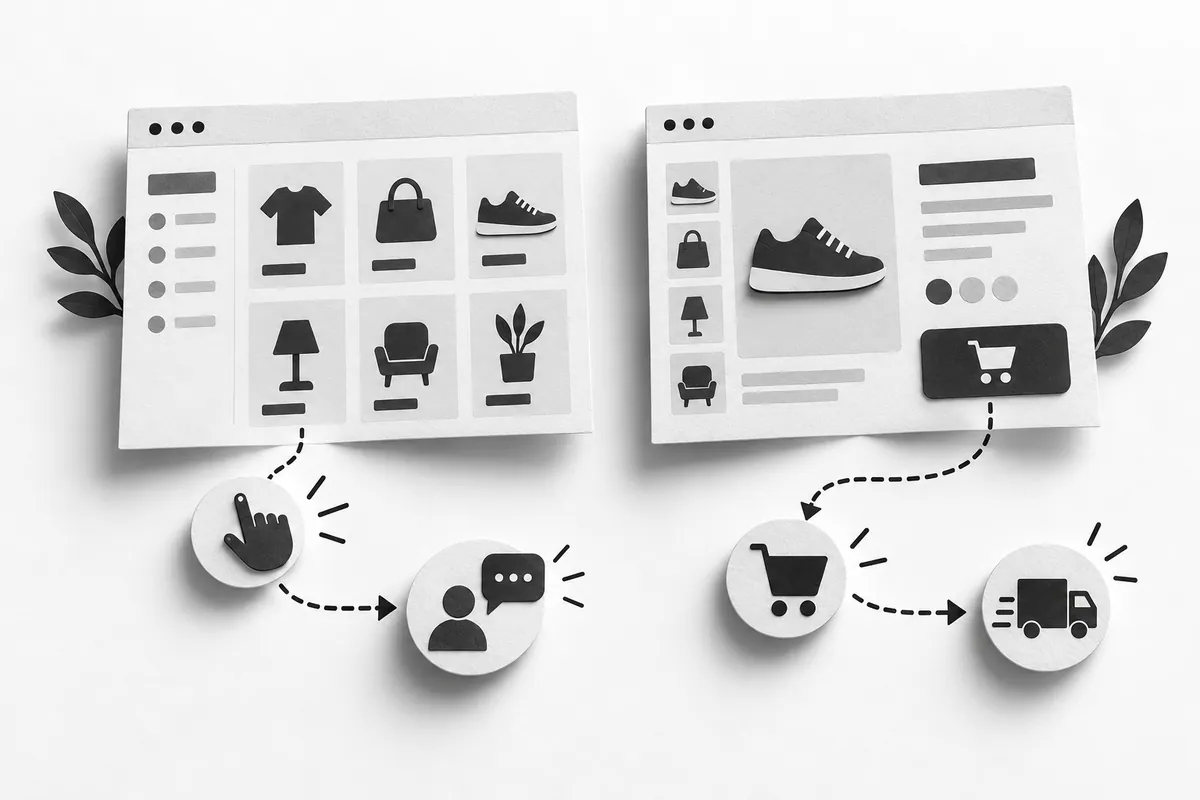
A service business website or a corporate website lets you separate different lines of business. On the home page visitors find their route, and on the service page they see the specific terms. A B2B corporate website often also needs materials for the different people involved in a purchase: the technical specialist, the manager and the future user.
Do not create a page for every keyword phrase. A separate URL is justified when the product, the audience or a substantial part of the answer changes. That way the structure supports both navigation and future SEO, instead of turning into a pile of near-identical texts.
How to lock in the decision before development
Make a short table (it will later grow into a specification): customer task, the page needed, the action, the data the sales rep needs and who handles it. Add the required integrations and what can wait. This lets you compare contractor proposals on the same scope.
When you discuss website development for your business, start with this map. If the website is tied to advertising, a CRM and the launch of a new line of business, look at complete business solutions: the website format should fit your whole way of working, not exist apart from it.