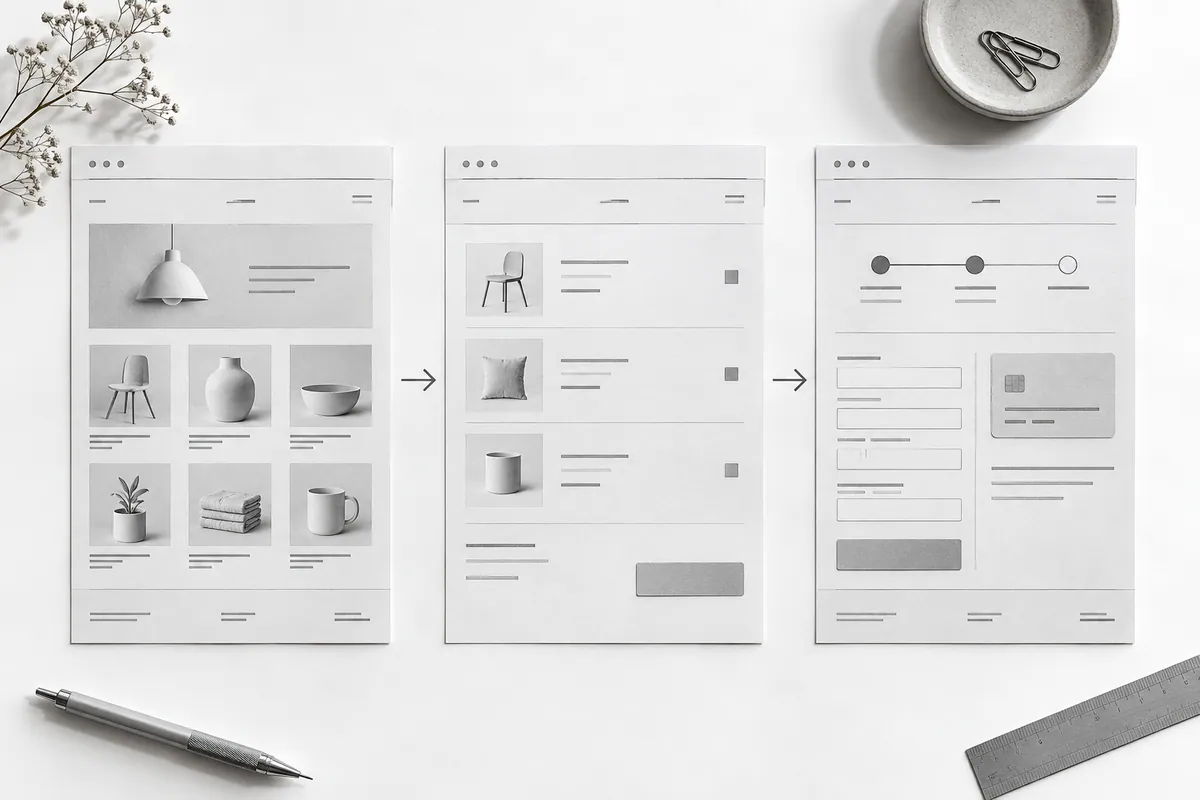
Check whether an order can be placed without a sales rep
Pick five typical products and try to pin down the final configuration, price, availability and delivery method for each. If every step needs clarification, a cart may promise something you cannot deliver. In that case it is better to collect the list of items a buyer needs and pass it on for a quote. Quote requests are easy to manage in a CRM.
A catalog needs solid structure too: categories, specifications, photos and a clear request form. It is not just a store without a checkout button. Its job is to help the buyer choose what to talk about and give your sales rep enough information to follow up. For a wider look at formats, see how to choose a website type.

Self-service buying depends on consistent data
For a store, decide where stock levels come from, how product variants work, what the delivery rules are and what happens when availability changes. A buyer should never find out after checkout that the configuration they chose does not exist. Also test (new website acceptance) orders with several items that have different terms.
A cart does not take away the need to handle exceptions. You need a process for cancellations, clarifications and repeat payments that matches how you actually work. Agree on it before launch, not during the first problem order.
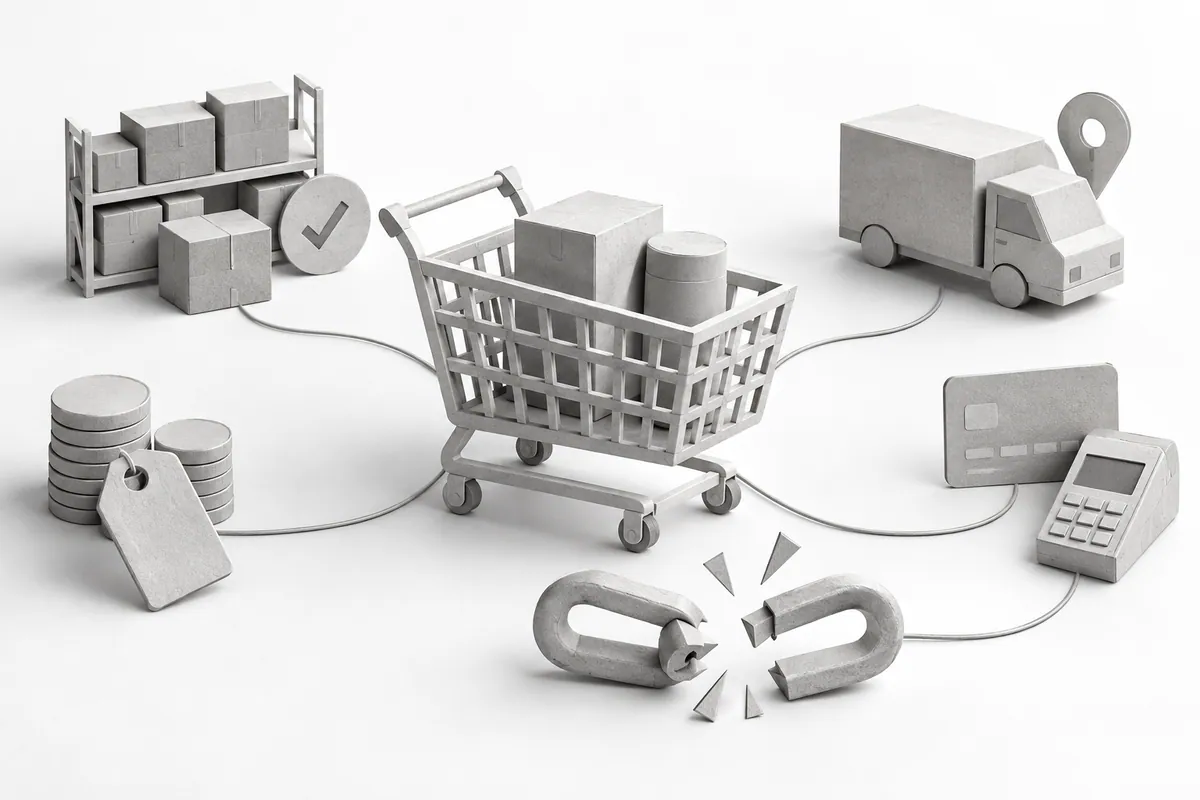
You can grow in stages
A business can start with a catalog for complex items and sell standard products through a separate, simple checkout flow. The key is not to mix expectations: every product card should make it clear whether it shows a fixed price or a quote request.
When building a catalog website, discuss how the data structure may need to grow. If your process already allows customers to order on their own, online store development should cover the full purchase path, not just the look of the product cards.