Five signals from day-to-day work
Signal one: a client has to explain their request again to a different employee. Signal two: when a sales rep goes on vacation, nobody can reconstruct what was agreed. Signal three: proposals have been sent, but the date of the next contact isn't recorded anywhere. These aren't just inconveniences: the business has no control over whether the conversation continues.
Two more signals show up in reports. The manager knows how many inquiries came in, but not why deals were lost. And ad sources are judged by what the team says, because a contact can't be tied to a campaign. A CRM for a small business should close these gaps first, not add a pretty dashboard.

What to gather before choosing a system
For one working week, note where inquiries come from, who handles them and where the outcome is stored. Pick a few real, anonymized paths: a quick purchase, a long approval process, a repeat order and a lost deal. Show where responsibility needs to be handed over.
You can't list every possible feature in advance. What you can do is set minimum requirements: the contact, what the inquiry is about, the person responsible, the status and the next step. If the system doesn't let your team keep these five fields up to date easily, extra automations won't solve the core problem yet.
Why buying a license isn't the same as implementation
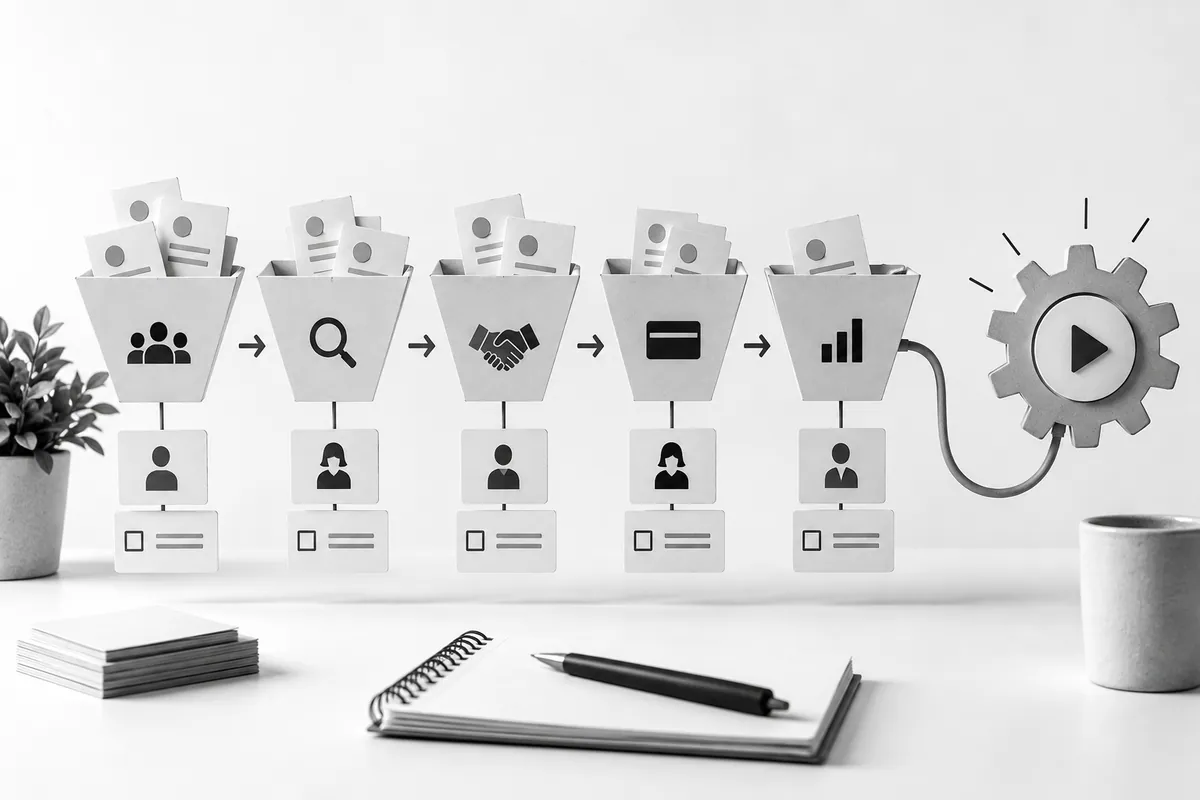
You need to agree on what each pipeline stage means. "In progress" can mean a first call to one rep and a contract ready to sign to another. In a pipeline like that, the report only creates the appearance of order. Every move between stages needs an event you can see on the record: request clarified, proposal sent, decision received.
Separately, set the rules for duplicates and for handing a client over. One company can have several contacts and several deals. Merging records automatically by name alone can mix up their history. It's best to test the first configuration on a small sample where the team knows what the correct result looks like.

Start small instead of rebuilding everything at once
Pick one business line or one group of sales reps. Move over the current contacts, connect one lead channel and train the team to go through the full scenario. Test more than creating a deal: also test a lost deal, a change of owner and a client coming back after some time.
The first success criterion is simple: every active inquiry has an owner and a next step, and its history makes sense without anyone explaining it out loud. You can check this by sampling records. A high fill rate for ten optional fields can look good and still say nothing about whether sales are under control.
When to move on to automation
Automate a recurring process only after the team has agreed on it manually. Otherwise the system will just send the wrong reminders faster and assign the wrong people. For every rule, define the exception: what to do with an incomplete contact, a repeat inquiry or an employee who isn't available.
CRM implementation should start with the process and a pilot configuration. Once the data and stages are stable, sales automation will help cut manual handoffs without burying problems under extra integrations.