
A stage means the deal has changed state
"Call the client" is a task, not necessarily a stage. A call may be needed while clarifying the request, after sending a proposal, or while agreeing on the contract. Turn every action into a column and the pipeline quickly becomes a long instruction manual where the meaning gets lost.
It works better to define each stage by a fact: inquiry received, need clarified, proposal sent, decision under review. Your names can differ, but the whole team must agree on which event lets a deal move forward.
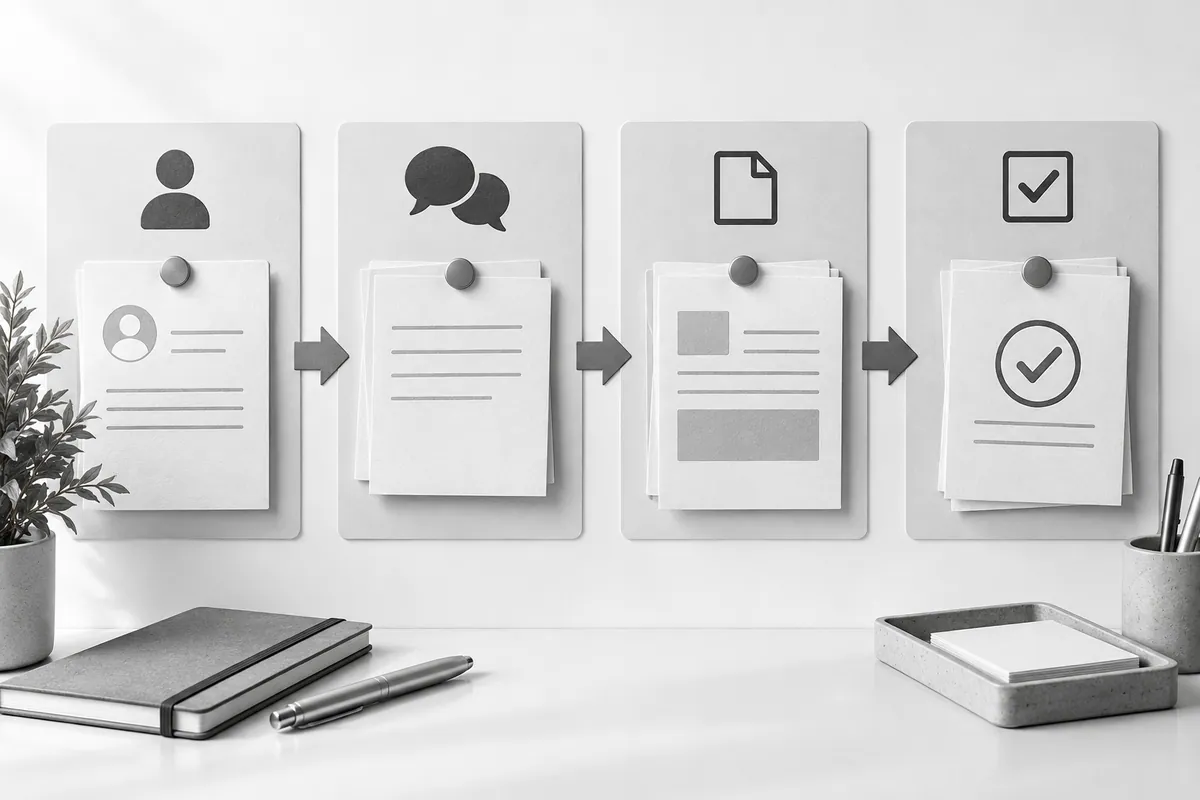
Every column needs an exit condition
For the "need clarified" stage, define the minimum data: which service, the main goal, and whether you can deliver it. For "proposal sent", you need the current version of the proposal and the date of the next contact. Don't demand data at an early step that will only appear after a technical assessment.
Walk the team through the rules on a few real, anonymized deals. Ask two sales reps to place each deal in a stage independently. If their answers differ, tighten the criteria. It is a simple way to test the pipeline before you build automated reports and reminders.
Lost deals are information too
Don't file every lost deal under a single "not interested" reason. At a minimum, separate "we don't offer that service", "terms didn't fit", "demand postponed" and "chose another solution". The same reasons help you judge lead quality from ads. The wording should point to action, not grade the employee.
Don't make reps guess a reason the client never gave. "Reason unknown" is more honest than an invented budget objection. Also decide whether the contact can be revisited later and who is responsible for that follow-up.

Track overdue deals without the noise
A next-action date is often more useful than one fixed time limit for every deal. In a complex project, waiting for technical details can be normal, while for an urgent service a single day without a reply is critical. So the rules should take the type of inquiry into account.
Once a week, review a handful of cards: is there an owner, a current status, the latest agreement and a next step? When that holds up consistently, add automated reminders and escalation. During CRM implementation these rules get agreed first, and automation only helps people follow them.