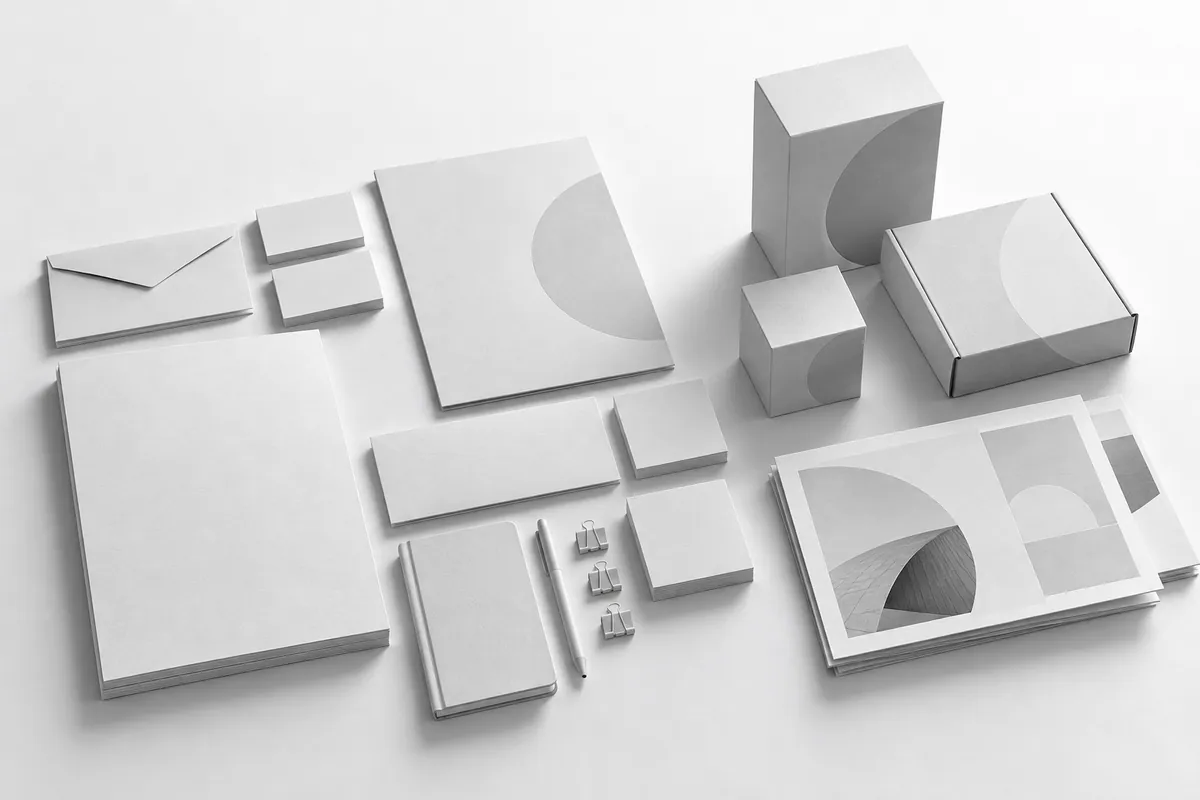
Where buyers will meet your brand
Start with a list of real touchpoints: the website, your social media profile, sales proposals, invoices, packaging or a storefront sign. That list looks different for an online consultant and for a maker of physical products. Don't order dozens of mockups just because they look nice in a presentation.
Pick the three most frequent points of contact with buyers and show the designer real examples (and add them to your branding brief). For example, the cover page of a proposal, a service card and an explainer post. Use exactly these to test whether the future system works with your actual copy, not just with short demo headlines.
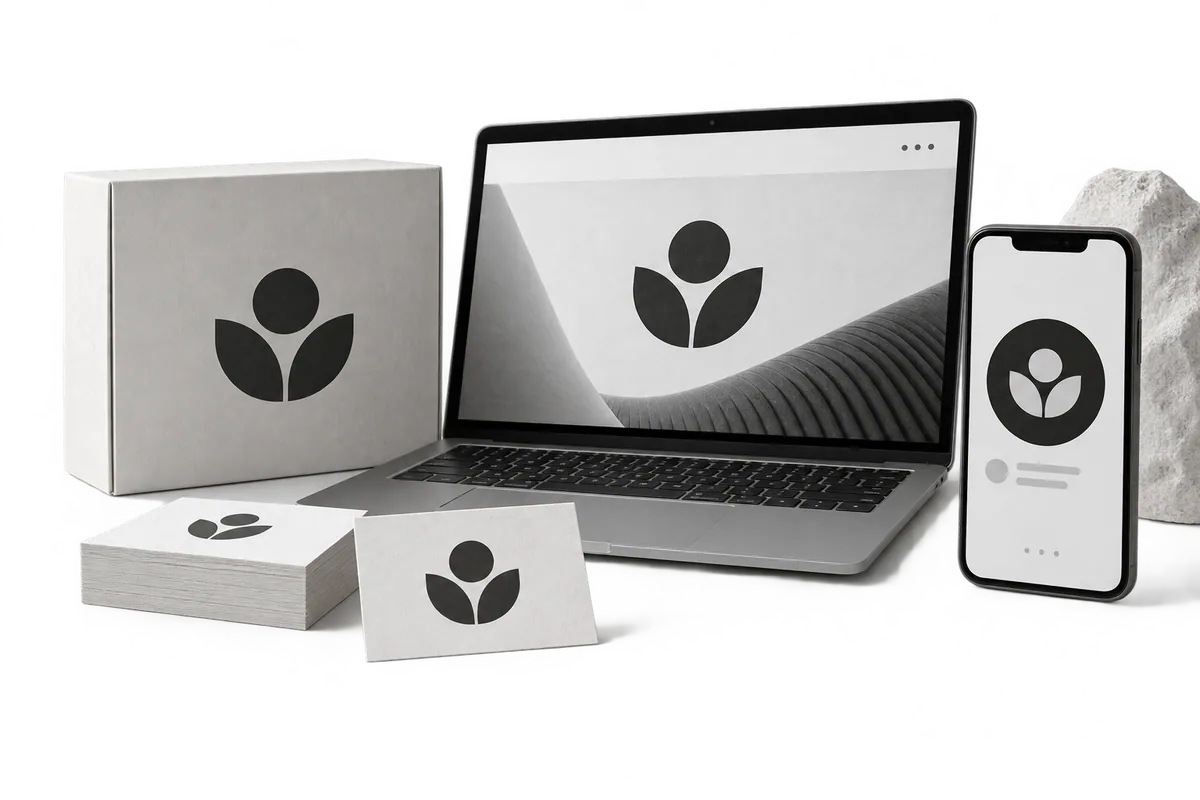
A minimum kit you can hand to your team
You need logo versions for light and dark backgrounds, plus rules for minimum size and clear space. Add a type hierarchy: headline, subheading, body text. If the style is monochrome, contrast and line weight become especially important.
Agree separately on how images are handled: photos, illustrations, diagrams, acceptable crops. A brand identity for a business should answer the question "how do we make the next piece," not just show off finished ones. Two or three editable templates are often more useful than a big folder of static images.
Test it on awkward content
Take a long service name, a big paragraph, a table of terms and a photo with a different aspect ratio. Try to build a page or a post from them. If everything falls apart, the system needs refining before it goes into wide use.
Check a small screen and black-and-white printing the same way. A mark that looks sharp on a large monitor can lose detail in an avatar. Thin gray text on a black background may be stylish, but it's unusable for service terms. Readability matters more than a striking mockup.
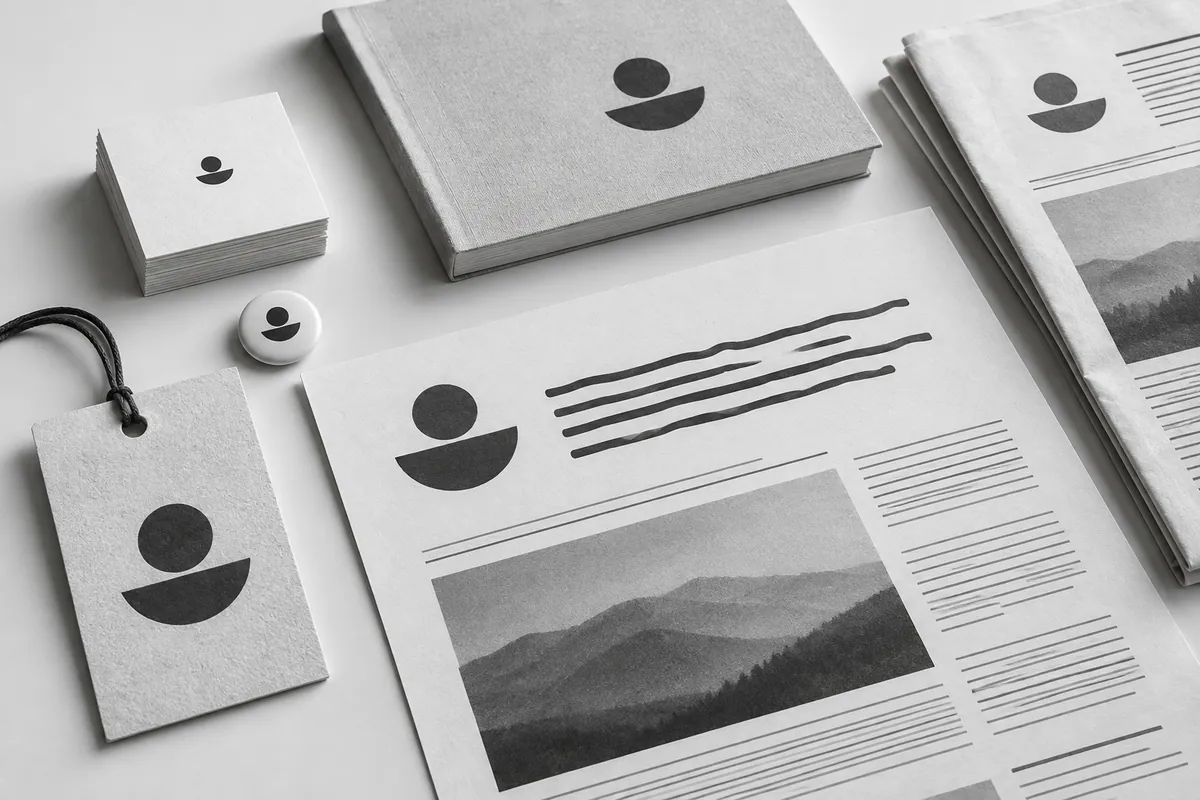
What to pin down at handover
Clarify which source files you'll receive, where the templates can be edited and who has access. Check the terms of use for fonts and third-party images: they depend on specific licenses. Don't assume that any file from a presentation can automatically be used everywhere.
Keep one up-to-date folder and a short rules document. It should include examples of correct use and common mistakes: a stretched mark, random fonts, too little margin. Assign someone to keep it updated so the team doesn't end up using three versions of the logo in parallel.
What can wait until later
Extended applications, complex animation and a large brand book can be planned once the main touchpoints have been tested. Postpone the volume, not the basic consistency. Even a small business benefits when its website, emails and profile look like one company.
On the branding and identity page, you can discuss exactly the kit you need. If you're preparing a website and your first ads at the same time, launching your business online helps tie the design to the specific channels where it will work.