Describe the audience through their decisions
Age and job title don't explain why someone picks your company. Add the situation: what they're buying, what worries them, which alternatives they consider and where they first meet the brand. If that first contact happens on social media, share the brief with your SMM team too. A complex service may involve several decision-makers with different questions.
Don't define your audience as "everyone." If you have several business lines, choose the main one for the first stage. Design should support a clear offer, not look premium, rock-bottom cheap, serious and playful all at once with no context to explain it.

State what sets you apart without advertising adjectives
Write down what the company does differently in its product, process or service. "Quality and professionalism" doesn't reveal any concrete difference. Explain which actions back up your chosen positioning and what a buyer can verify.
List unwanted associations separately. For example, a tech service doesn't want to look like an entertainment app, and an affordable product doesn't want to look like an exclusive luxury club. This helps rule out the wrong directions early.
Every reference needs an explanation
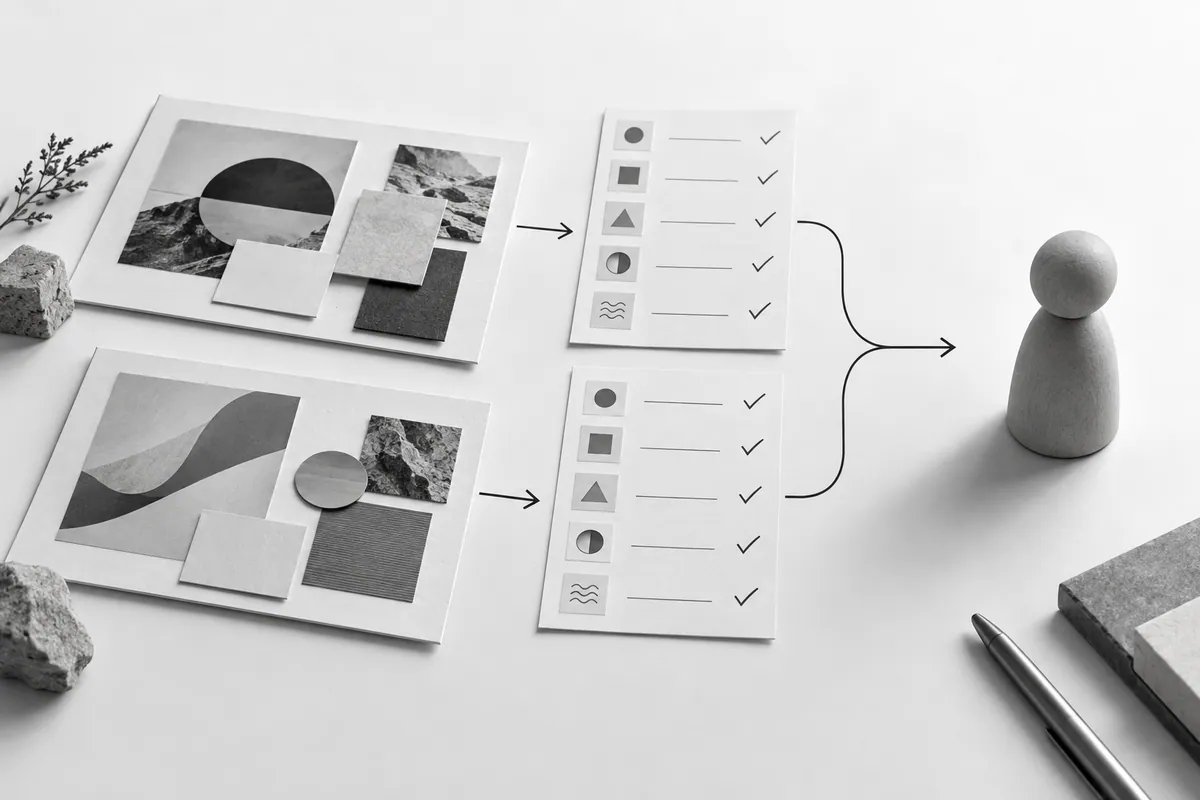
Instead of a collection of ten pretty pictures, write down exactly what you like: the contrast, the way photography is used, simple typography or the composition. Show examples you don't want, too. References help the conversation, but they are not a request to copy someone else's mark.
Include real applications and real copy. A long service name, a profile picture, a sales proposal and a mobile screen test the system better than one large mockup on a wall. Note who will create materials later and which tools they use.

Agree on how the decision gets made
Name the person responsible, the way comments are collected and the evaluation criteria. The team should hand over consolidated feedback, not conflicting wishes from different chats. A comment like "it doesn't feel trustworthy" should come with an example and a link to the goal. Once approved, the style becomes a template kit.
During identity work, the brief becomes the basis for review. If your positioning isn't yet tied to your sales channels, a digital plan will help decide where, and for whom, the new style needs to work first.