
Collect the buyer's language
Write down your service names, the wording people use in inquiries, the typical questions your sales team hears and the reasons people get in touch. A customer may describe the problem without knowing the professional name for the solution. For example, "leads get lost between sales reps" could lead to a CRM article, even though the query never mentions the acronym.
Add data from keyword tools and Search Console if the site already gets impressions. Don't assign search volume to words you haven't measured. A list of hypotheses is useful in itself, but in the document it should be kept apart from confirmed demand data. If you have no data yet, start with an SEO audit.
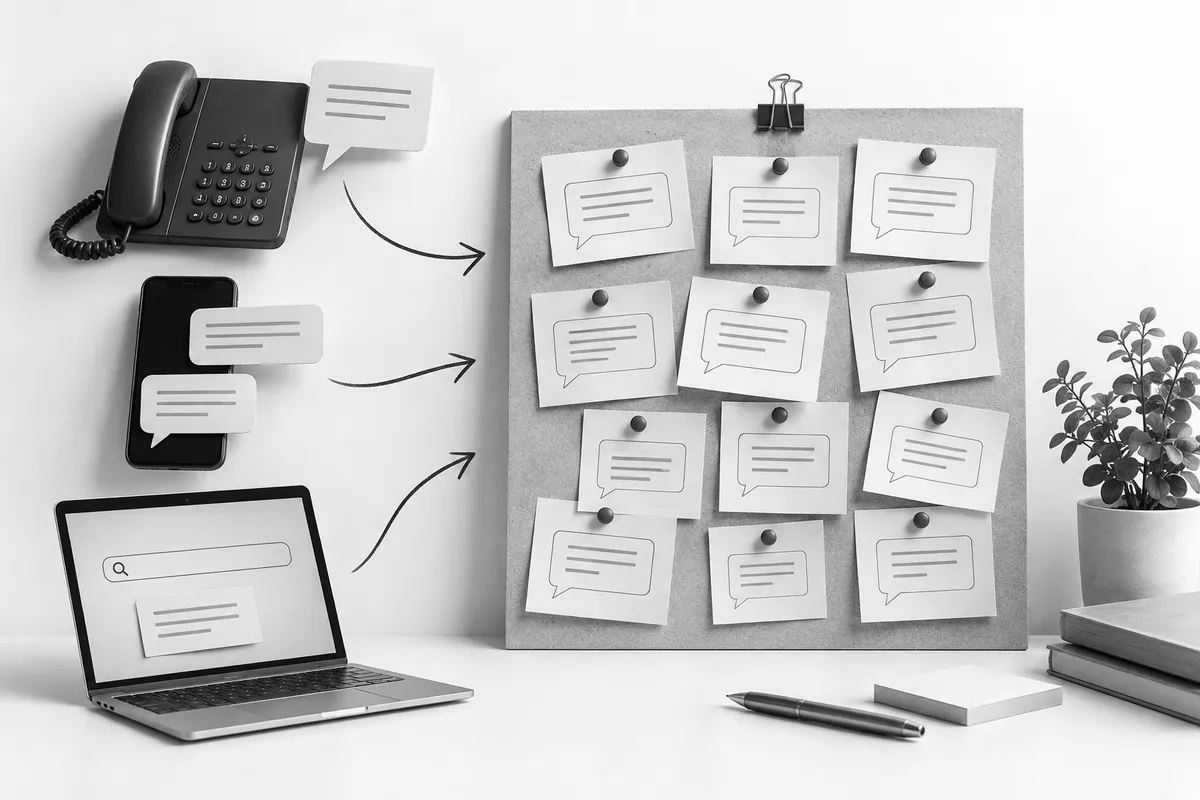
Group by intent, not just by a shared word
"What is a CRM," "CRM implementation" and "CRM integration error" share a term but need different answers. The first query needs an explanation, the second needs service terms, the third needs troubleshooting. A single page rarely handles all three well.
Look at the types of results for your key queries: guides, catalogs, service pages, comparisons. The search results help you test your intent hypothesis, but they aren't an order to copy your competitors' structure. Your content should reflect your own offer and expertise.
One cluster, one main answer
Group phrases together when the user expects the same service on the same terms. Synonyms usually don't need separate URLs; otherwise you end up with keyword cannibalization. A separate page is justified when the product itself, the audience or the buying process changes.
For each cluster, pick a main page and supporting blog topics. The service page explains the scope of work, while an article can go into detail on a choice or a common mistake. A link between them shows the reader the next step without repeating the same text.

Priorities matter more than a complete list
Assess how closely a topic relates to your service, whether you have the materials ready and how much it helps the buyer decide. Don't start with dozens of narrow pages if your main service is described vaguely. Low search volume doesn't make a query useless if it matches exactly the customer you want.
A handy working spreadsheet has these columns: query, intent, cluster, target URL, questions to cover and content status. Flag doubtful groups separately for review. The copy for the target URL follows the rules of SEO copy for a service page. This lets you update the map as real impressions and inquiries come in.
In SEO work, a map like this connects research to specific changes. For a new service business website, it also helps plan the menu before copywriting and front-end development begin.