Collect facts, not every file the company has
Start (see what tasks to give an AI bot) with your services, terms, what a customer should prepare before reaching out, and the limits of your work. For each topic, name the current source and the person responsible for it. Old offers and drafts should never carry the same weight as approved material.
Remove unnecessary personal data and internal secrets. A public assistant does not need your entire email archive to explain how a consultation works. Limit the bot's access to your systems the same way you limit permissions in a CRM.

Write answers with context
State which service a rule belongs to and when it applies. A line like "turnaround: five days" with no subject or conditions can turn into a promise you never made. If the timeline is set only after an assessment, say so plainly.
Prepare separate answers for situations the bot does not know: ask a clarifying question, hand over to a specialist, or say that no confirmed information is available. Made-up confidence is worse than an honest limit.

Test the knowledge base after every significant change
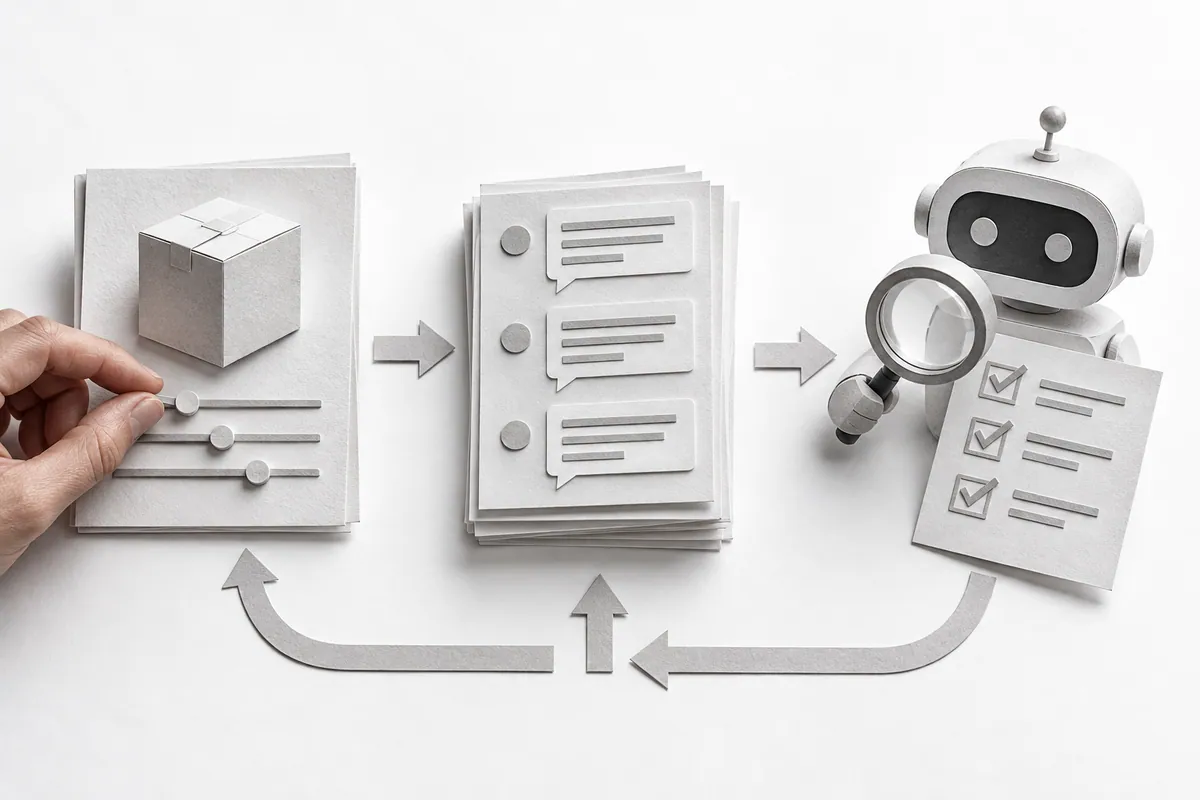
Keep a set of ordinary, ambiguous and provocative questions. Check that old terms do not resurface and that the bot correctly declines to make unconfirmed claims. Add version control (the same principle as CRM access permissions) and a review date.
The knowledge base needs an owner inside the company: whoever changes the terms also updates the answers. Agree on this while you are building the AI chatbot. Website maintenance keeps an eye on integrations and tests, but it will not write your business terms for you.