
Count all the way to the sale, not the click
Decide which inquiries your team can actually serve. A contact from outside your area or a request for a different service shouldn't be lumped in with potential buyers. Agree on one qualification standard, or a low cost per lead will hide money spent on random contacts. It helps when lead statuses live in a CRM.
A simple example: a campaign spent $240 and brought 40 inquiries, 24 of which matched the service, and 4 became sales. That puts an inquiry at $6, a qualified lead at $10 and one sale at $60. These are teaching numbers, not a forecast and not a Boroda Expert result.
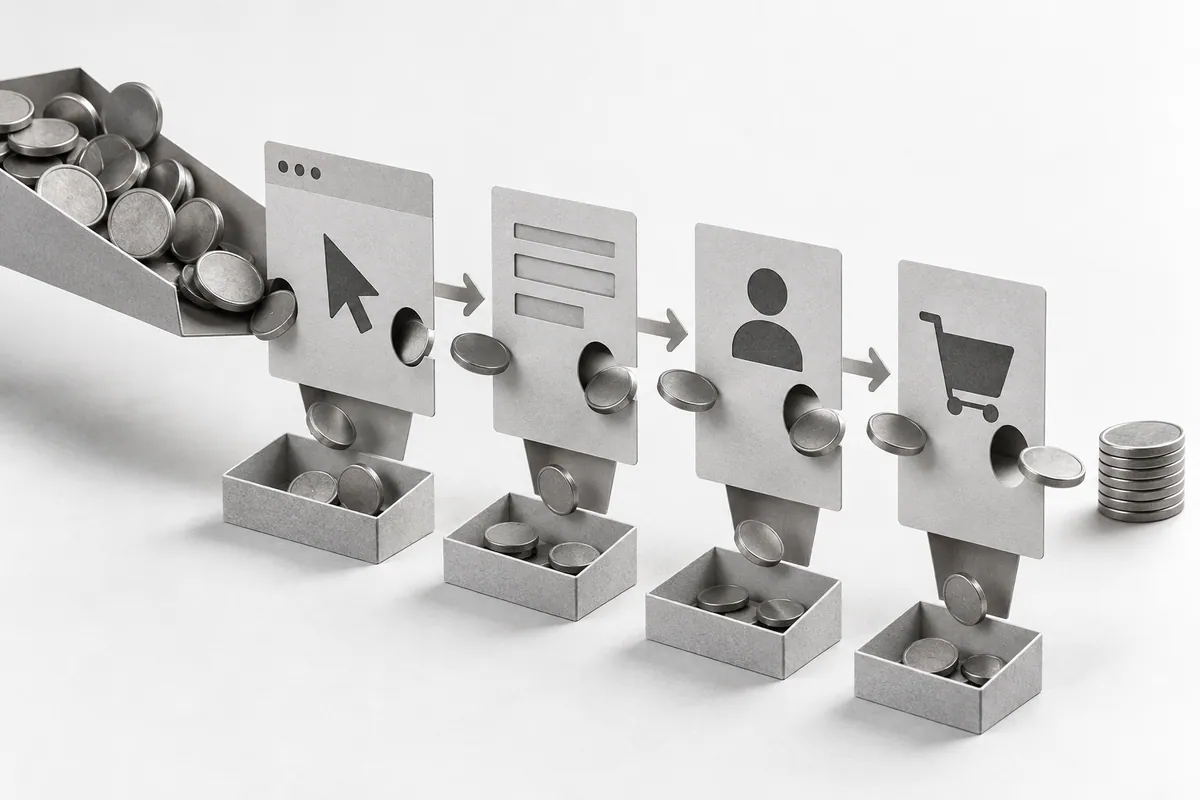
Don't confuse revenue with what you can spend on acquisition
Comparing ad spend only with the contract value isn't enough. Fulfilling the order costs resources too. For planning, you need to understand your own unit economics and how much you can afford to spend on acquisition once the team's work is accounted for.
Don't build repeat sales into the model until your history confirms them. If the product is new, treat them as a separate hypothesis. That way you see whether the first sale is viable on its own, and you don't mask a weak result with future expectations.
A test needs limits and a clear question
Fix one offer, one channel, one page and one audience. Write down exactly what you're testing: whether there is real demand, whether the offer is clear, or how good a new format is. If you change everything at once, even a positive result is hard to repeat.
Agree on ad spend and on fees for setup, configuration and management separately. They are not the same budget. Set aside resources to check the landing page and to handle inquiries, because traffic won't make up for a broken form or a sales rep who never replies.
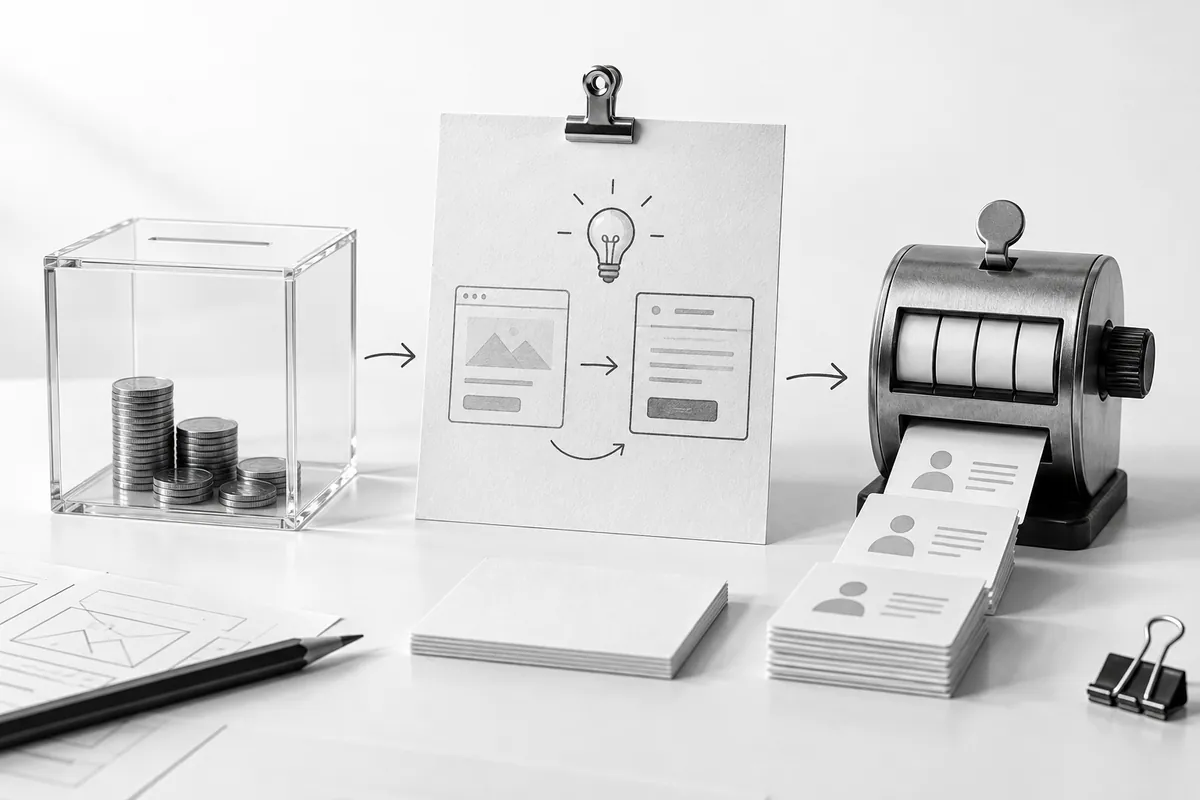
When to revisit the calculation
Look beyond yesterday's totals. With a long sales cycle (how to connect ads to your CRM), a lead needs time to get through negotiations. Compare groups of inquiries that have been observed for a similar length of time. Otherwise a new campaign will look worse simply because its customers haven't decided yet.
Raise or cut the budget once you can see the bottleneck. Getting the right leads but the team can't keep up with replies? Fix your lead generation process first. Getting the wrong inquiries? Then it's time to review your Google Ads setup and the offer itself, not the click report.